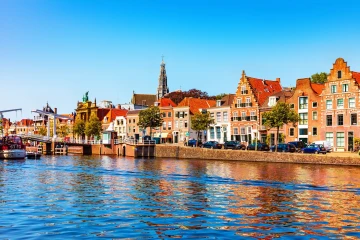
🇳🇱 Marinas in Netherlands — North Sea
The Netherlands connects an open North Sea coast and the Wadden Islands with a network of delta waters, lakes and canals lined by historic harbour towns.


Netherlands
Here, moving between the sea and inland waters changes the character of a trip. Delta waters lie in the southwest, an exposed dune coast runs along the Holland provinces, and islands and tidal flats form the northern Wadden Sea. Behind the dykes are the IJsselmeer and Markermeer: large freshwater lakes with town harbours.
Summers are generally mild, with long days. The sea feels colder than the land in spring, while wind and rain more often affect autumn plans. Inland waters offer alternative routes but do not guarantee calm conditions: short waves can build quickly on the broad shallow lakes.
At sea, tidal streams, sandbanks and shipping near major ports matter. Inland, locks, opening bridges and clearance with the mast up shape the route. The Wadden Sea’s tidal conditions do not apply to the lakes behind the dykes, which have no tidal cycle.
Ashore, the journey links old trading towns, canals and small ports. Islands and dunes add beaches and nature walks, while town stops offer museums and maritime history.
Sailing character
- Tides
- Open coast
- Island hopping
The exposed coast, tidal Wadden Sea and inland waters offer different kinds of trip; each area has its own conditions.
What to explore ashore
- Coastal nature
- Maritime heritage
- Historic towns
Watch out
- Tidal access — Wadden Sea and islandsAccess to shallow areas of the Wadden Sea depends on the tide.
- Bridge clearances — Southwest delta, IJsselmeer, Markermeer and canalsInland routes depend on mast clearance, bridge openings and lock operations.
Sailing areas
The calendar is oriented towards sea cruising. Inland routes may offer a longer season, but bridge and lock operations matter. The IJsselmeer and Markermeer are exposed to wind and can be rough.
- Southwest delta
- Open coast of Holland: Open coast, Tides
- Wadden Sea and islands: Tides, Island hopping
- IJsselmeer, Markermeer and canals
Practical information
Currency
Euro · EUR
Official languages
Dutch, Frisian — province of Fryslân
Emergency contacts
General emergency number
112Kustwacht Nederland
+31889584000VHF voice channel 16
Call sign:Den Helder Rescue
At sea use VHF 16; within the Netherlands the Coastguard can also be reached on 0900-0111.
Official resources
- Marine forecasts · KNMI Wind, sea state and visibility for the selected sea area
- Navigation information · Rijkswaterstaat Waterway notices, bridges, locks and passage restrictions
Checked
Arrival and formalities
For a private pleasure yacht under 45 m in the European Netherlands. Larger vessels use different reporting channels.
Checked
From another Schengen country
A direct passage from another Schengen country normally does not require external-border formalities. Checks are still possible.
- Keep everyone’s travel documents and the vessel’s papers aboard. Each person’s right to stay is a separate matter.
- Check local port requirements and current border measures. A marina call does not remove customs obligations.
From the UK or another non-Schengen country
Cross the external border using the maritime border-control procedure.
- Choose a border port and arrange arrival procedures. Notify the border authority at least 24 hours before arrival; for a shorter passage, notify on departure from the previous port.
- For a yacht under 45 m, send crew and passenger lists using forms 5 and 6: to the port police for Rotterdam, or to the Marechaussee for other ports. Use the addresses and forms in the official instructions.
- Complete border formalities as instructed by the authority. Report changes to timing or persons aboard without delay.
Departure from the Schengen area
Exit clearance and notification to the next country are separate steps.
- Before crossing the external Schengen border, submit crew and passenger lists to the same authority, at least 3 hours and no earlier than 3 days before the border crossing.
- Arrange exit controls and report changes. The official instructions explain exceptional cases of late notification.
Customs
Schengen border rules and the yacht’s customs status are separate matters. Before arriving from the UK or another territory outside the EU customs territory, check the vessel’s status and eligibility for temporary admission. Conditions depend on ownership, the user’s residence and the vessel’s use; a foreign flag alone does not establish eligibility for relief.
Information sources
Checked
-
KNMI — Summer
Sailing here
-
KNMI — Coastal waters
Sailing here
-
NBTC Holland.com — Wadden Islands
Sailing here
-
Rijkswaterstaat — IJsselmeer
Sailing here
-
Rijkswaterstaat — IJsselmeer and Markermeer water management
Sailing here
-
Rijkswaterstaat — Vaarweginformatie
Sailing here
-
Rijksdienst voor het Cultureel Erfgoed — Het IJsselmeergebied
Sailing here
-
European Union — Netherlands
Currency · Official languages
-
Rijksoverheid — De Friese taal
Official languages
-
European Commission — 112
Emergency contacts
-
Kustwacht Nederland — Hulp
Kustwacht Nederland
-
EUR-Lex — Schengen Borders Code, Annex VI 3.2.4–3.2.6
From another Schengen country
-
Sea arrival and departure rules
From another Schengen country · From the UK or another non-Schengen country · Departure from the Schengen area
-
Customs guidance for pleasure craft
Customs
-
Dutch Customs guidance
Customs
Marinas on the map
Use the map to place the country, its sailing destinations, islands, and available marina pages before choosing where to sail next.
Popular places in Netherlands
Browse popular sailing places in Netherlands. Places with the most marinas appear first.


Top rated marinas
Discover the best marinas in Netherlands, ranked by skipper ratings and reviews.