🇩🇪 Marinas in Germany — North Sea
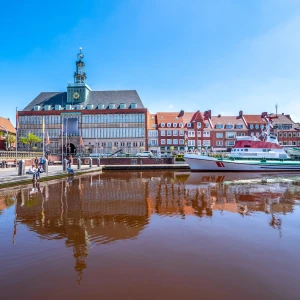
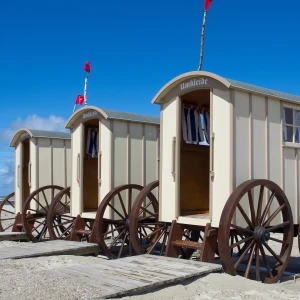
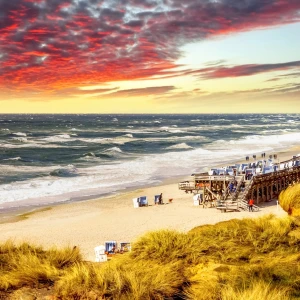
Germany’s North Sea coast combines the Frisian Islands, the drying flats of the Wadden Sea and broad river estuaries leading to port towns.


Germany
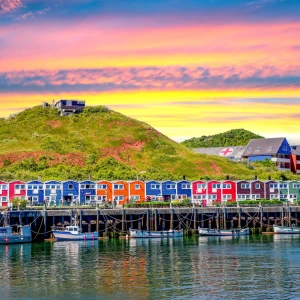
Behind the East and North Frisian island chains lies the Wadden Sea, a shallow area where large expanses of seabed emerge at low tide. Routes between islands and mainland follow tidal channels. The open approaches to the Ems, Weser and Elbe feel different, with yachts sharing waters with large ships. Heligoland stands separately offshore.
Summer days are long, but conditions afloat often remain cool and windy. The sea is still cold in spring, while strong winds more often restrict passage choices in autumn and winter.
Tides determine available depth and access to many berths. Channels and sandbanks shift, so even a short passage between neighbouring islands needs current navigation information. National parks restrict navigation and landing in parts of their waters.
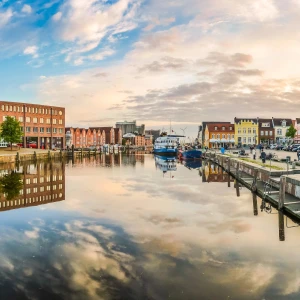
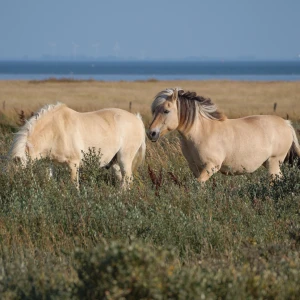
Ashore, the islands offer beaches, dunes and birdwatching. On the mainland are fishing harbours, sea dykes and maritime museums. The contrast between quiet island shores and large river ports gives this coast much of its character.
Sailing character
- Tides
- Open coast
- Island hopping
Island routes through tidal channels alternate with open water and broad navigable estuaries.
What to explore ashore
- Coastal nature
- Maritime heritage
- Islands
Watch out
- Tidal access — East Frisian Islands and Ems, North Frisian Islands and coast, Jade, Weser and ElbeAvailable depth and arrival windows depend on the tide and the chosen harbour.
- Restricted waters — East Frisian Islands and Ems, North Frisian Islands and coastProtected areas of the Wadden Sea have navigation and landing restrictions.
Sailing areas
The calendar describes a sea cruise, not individual harbour opening dates. Shelter behind the island chain does not remove tidal constraints; reaching Heligoland involves open water.
- East Frisian Islands and Ems: Tides, Island hopping
- Jade, Weser and Elbe: Tides
- North Frisian Islands and coast: Tides, Island hopping
- Heligoland: Open coast
Practical information
Currency
Euro · EUR
Official languages
German
Emergency contacts
General emergency number
112MRCC Bremen
+49421536870VHF voice channel 16
Call sign:Bremen Rescue
DGzRS maritime rescue coordination centre for the German coast.
Official resources
- Marine forecasts · DWD Wind, sea state and visibility for the selected sea area
- Tides · BSH Predicted tidal levels and times; actual water levels also depend on weather
- Navigation information · WSV / ELWIS Notices to skippers and official maritime waterway information
Checked
Arrival and formalities
For a private pleasure craft on the coast covered by this profile. Personal entry rights and the vessel’s customs status are assessed separately.
Checked
From another Schengen country
A direct passage from another Schengen country normally does not require external-border formalities. Checks are still possible.
- Keep everyone’s travel documents and the vessel’s papers aboard. Each person’s right to stay is a separate matter.
- Check local port requirements and current border measures. A marina call does not remove customs obligations.
From the UK or another non-Schengen country
Cross the external border using the maritime border-control procedure.
- When arriving from the UK or another non-Schengen country, choose an authorised border port. Arrange the procedure and timing with the Bundespolizei in advance.
- Prepare the vessel’s papers and everyone’s travel documents. Using another port requires specific permission and is not a routine alternative to border checks.
Departure from the Schengen area
Exit clearance and notification to the next country are separate steps.
- Before crossing the external Schengen border, arrange exit clearance with the Bundespolizei through an authorised border port.
- Check the next country’s notification requirements and separate customs obligations.
Customs
Schengen border rules and the yacht’s customs status are separate matters. Before arriving from the UK or another territory outside the EU customs territory, check the vessel’s status and eligibility for temporary admission. Conditions depend on ownership, the user’s residence and the vessel’s use; a foreign flag alone does not establish eligibility for relief. Heligoland is outside the EU customs territory: even a passage between the island and mainland Germany requires a separate check of customs rules.
Information sources
Checked –
-
DWD — Regional climate of northern Germany
Sailing here
-
Nationalpark Wattenmeer — Watersports
Sailing here
-
BSH — Official tidal predictions
Sailing here
-
WSV / ELWIS — Maritime navigation
Sailing here
-
Nationalpark Wattenmeer — Exploring nature
Sailing here
-
German National Tourist Board — Heligoland
Sailing here
-
German National Tourist Board — Maritime museums in Bremerhaven
Sailing here
-
European Union — Germany
Currency · Official languages
-
DGzRS — Notfall
Emergency contacts
-
DGzRS — Was tun im Seenotfall?
MRCC Bremen
-
EUR-Lex — Schengen Borders Code, Annex VI 3.2.4–3.2.6
From another Schengen country
-
Sea arrival and departure rules
From another Schengen country · From the UK or another non-Schengen country · Departure from the Schengen area
-
Customs guidance for pleasure craft
Customs
-
Heligoland customs rules
Customs
Marinas on the map
Use the map to place the country, its sailing destinations, islands, and available marina pages before choosing where to sail next.
Popular places in Germany
Browse popular sailing places in Germany. Places with the most marinas appear first.