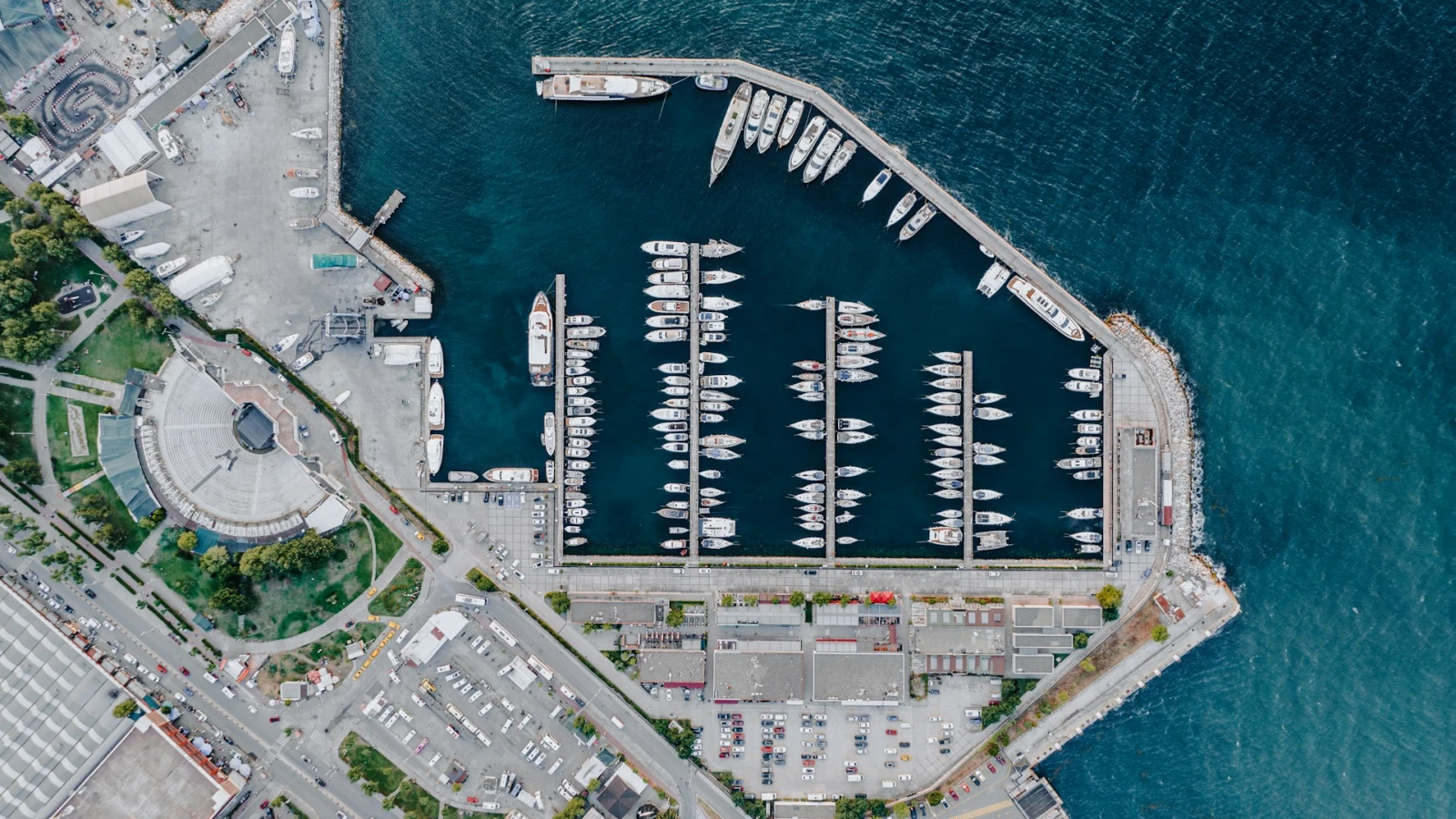
A marina is not just a place where the boat spends the night. For the crew, it is simultaneously a berth, a storage point, a service hub, a gateway into town, and sometimes a shelter from the weather. A poor choice rarely looks dramatic at the booking stage: a polished website, good photos, a reasonable price. The problems begin later - when it turns out the entrance is shallow at low tide, the pontoon does not have the power supply you need, the nearest grocery store is a forty-minute walk away, and in a strong crosswind the basin becomes awkward and uncomfortable.
A strong marina is not the "best overall," but the best one for a specific task. A one-night stop, a weather window, provisioning, a crew change, repairs, waiting for spare parts, or a calm family stopover are all different scenarios, and each requires its own set of priorities. If you want to compare real marina pages, nearby services, and stopover notes before you book, the Sailors.Tips map is a practical place to start.
 Sailors.Tips map
First, define the purpose of the stop
Before comparing marinas, ask one simple question: why are you going there at all? If the goal is to sit out a front, what matters most is a protected basin, a straightforward entrance, and reliable docking assistance. For provisioning, the winner is not the prettiest marina, but the one that gives you easy access to a supermarket, laundry, pharmacy, and taxis. If you need repairs, priority goes to marinas with yard services, a travel lift, contractor access, and a workable spare-parts logistics chain. Crew changes are in their own category: the key factors become parking, transfers, airport access, late check-in, and the ability to handle luggage calmly and efficiently.
All this leads to the main principle: do not compare marinas "in general." Compare them against the specific mission of the stop. Otherwise, you almost always end up paying extra for things you do not use and saving money on the things that are actually critical.
1. Location matters more than a beautiful waterfront
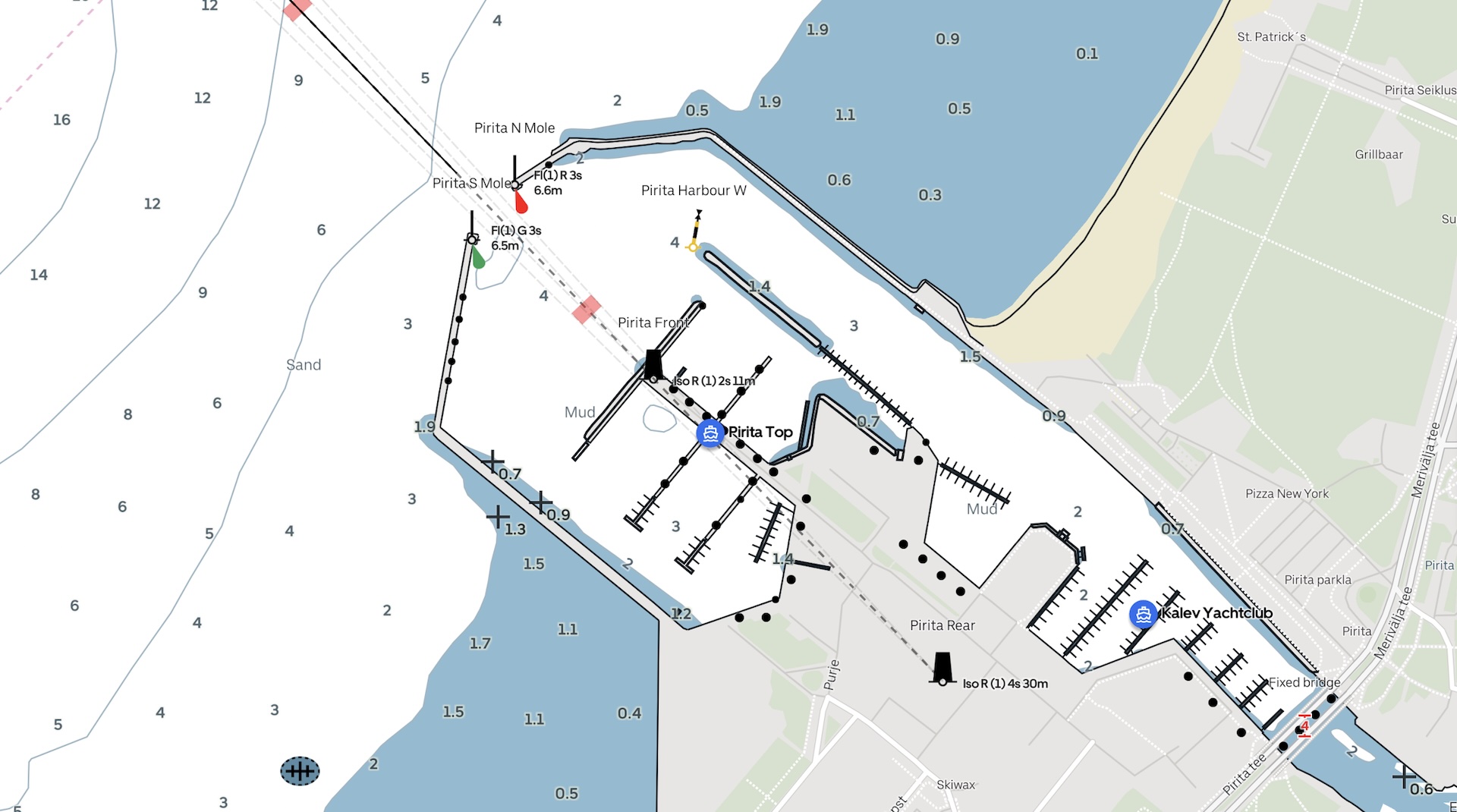
NOAA describes nautical charts as one of the most fundamental tools available to mariners. That is a useful reminder: the first thing to evaluate is the approach. Nautical charts show depths, landmarks, and navigation aids, while accurate tide and current data matter not just for comfort, but also for safety: a change in water level can leave a boat aground or make an entrance and maneuvering more difficult.
Marina location is not really about which town it is in. It is about answering a set of practical questions. What is the actual depth in the channel and at the visitor berth at your expected water level? Are there shoaling areas that do not show up in photos? Are there bridge height limits or lock schedules to account for? How well protected is the entrance from swell, crosswinds, and opposing current? How realistic is a night arrival if you run late on passage? Coast Pilot and similar pilotage publications exist for exactly this reason.
Then there is the question of how fresh that information is. The UKHO Notices to Mariners are published weekly and contain the latest safety-critical navigational information. NOAA likewise notes that critical corrections can include new rocks, wrecks, shoals, and changes to buoys and lights. In other words, an old chart or last year's marina PDF is not a small detail - it can be a real error at the entrance.
2. The berth itself: what exactly are you booking?
The word "berth" often hides important details. In one marina it may mean a wide finger pontoon with easy shore access. In another, it may mean stern-to mooring with lazy lines. In a third, it may mean stern-to with your own anchor. The RYA advises crews in the Mediterranean to confirm in advance how the bow will be secured - by lazy lines or by anchor - and notes that when depth is uncertain, a bows-to option may keep drives or appendages in deeper water. In other words, the real question is not "is there a space?" but whether the docking arrangement itself suits your boat and your crew.
That is why booking a berth means asking about more than length. At minimum, you need four parameters: permitted LOA and beam, actual depth at the berth, the mooring configuration, and any restrictions related to hull shape. For a catamaran, a deep-keeled yacht, a high-sided motorboat, and a boat with outdrives or outboards, the "same" visitor slot can mean completely different levels of comfort and risk.
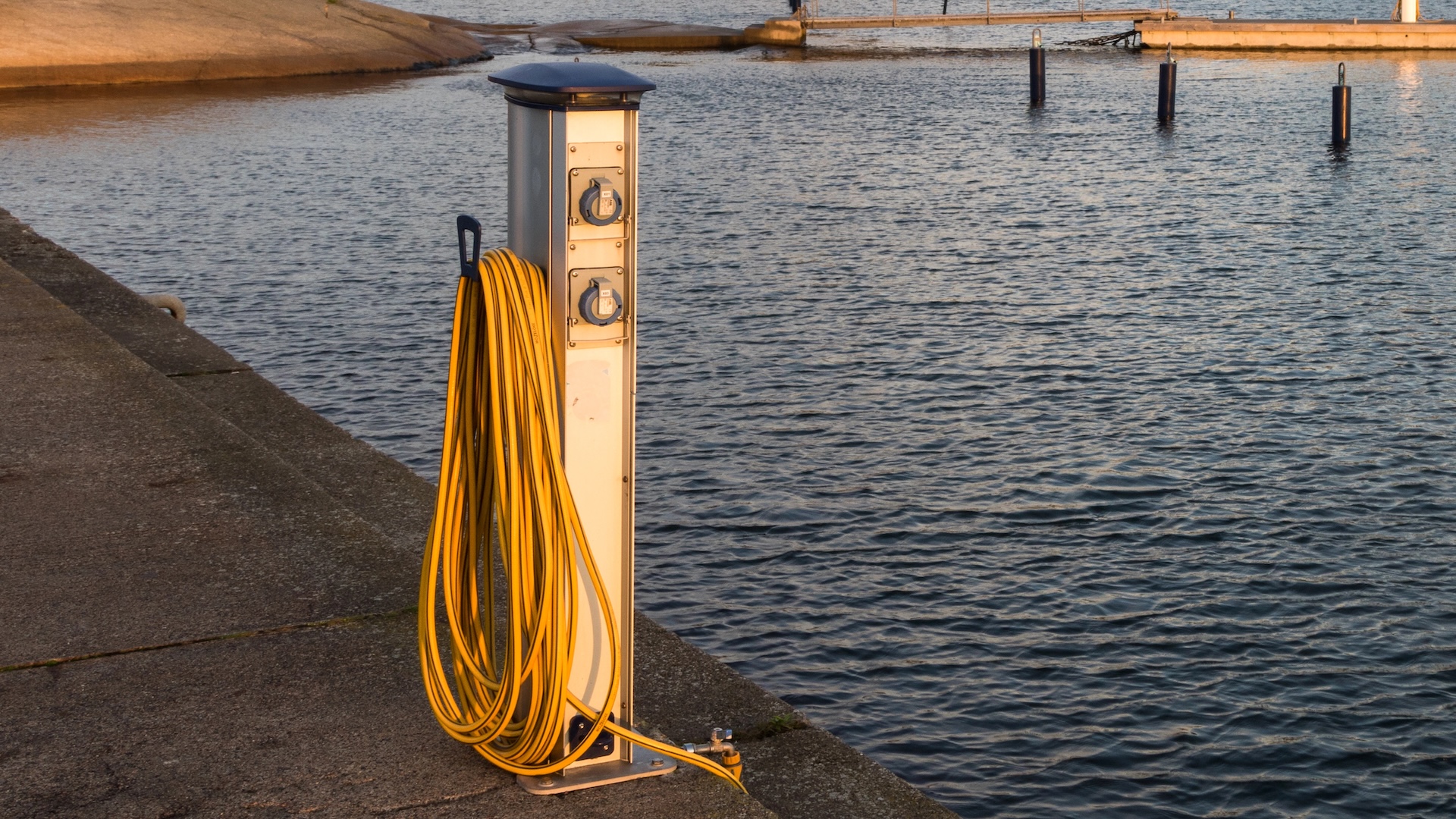
Utilities also deserve separate scrutiny. The current Blue Flag criteria for marinas state that water and electricity should be available close to berths, the installations should be safe and compliant, and lighting and clear operating rules matter as well. In practice, that means you should not just ask whether there is electricity. You need to know what voltage, what amperage, what plug type, what is included in the tariff, and whether it will actually support your onboard load.
3. Infrastructure: both afloat and ashore
When two marinas look similar on the chart, independent quality signals become useful. Gold Anchor structures its assessment around six categories: ambience; planning, policies, and procedures; customer service; environmental standards; on-water facilities and infrastructure; and on-shore facilities and infrastructure. It also considers berth holder surveys, and mystery shopper checks can be used during the accreditation period. This matters not because "stars solve everything," but because such a framework forces you to look beyond the pontoon itself and evaluate service, processes, and shore-side practicality.
Blue Flag looks at a different, but equally useful, set of signals: safety, services, sanitation, water, waste handling, accessibility, and environmental management. The program also makes it clear that compliance must be maintained continuously, and the flag can be suspended or withdrawn if criteria are not met. The practical conclusion is simple: accreditation is a good filter, but it is not a substitute for checking whether a marina fits your specific scenario.
So what should you compare under facilities? At minimum: the condition of toilets, showers, and potable water; the availability of pump-out for black water and ideally bilge-water disposal; a fuel dock and its operating hours; bins for general, recyclable, and hazardous waste; first-aid, firefighting, and lifesaving equipment; and the existence of a repair area, crane, travel lift, workshops, and chandlery. The Blue Flag criteria lay this out quite concretely: sanitary facilities, toilet tank reception, recycling, hazardous waste, bilge water, fueling, repair and washing areas, and a marina map that shows where these points are located. If a marina has a dedicated repair or wash area, it should have filters or equivalent systems so pollutants do not flow back into the basin.
If you are looking at a large marina in peak season, it also helps to ask about the scale of the sanitary infrastructure. In Blue Flag guidance, a rough benchmark is one toilet, one urinal, one shower, and one washbasin per 25 berths, and those areas should be easy to access and easy to find on the marina plan. It is not a universal law, but it is a good stress test: does "full service" in reality mean two showers for several hundred people?
There is another less obvious marker of quality: internal wayfinding. Blue Flag specifically calls for a map showing key marina amenities, from sanitation and recycling to first aid, fuel, guest berths, and nearby public transport. In a large marina, that is not decoration. It is a real sign that the place is designed for visiting crews who do not already know the local logic of where everything is.
A separate advantage is a marina that remains understandable after the office closes. Blue Flag requires visible safety precautions and emergency plans: information about fueling, safe use of electrical outlets, no-swimming rules, the location of firefighting, lifesaving, and first-aid equipment, as well as emergency phone numbers. If you arrive late, that kind of readability is pure practicality.
4. Services around the marina
Many people choose a marina as if the crew never goes ashore. Unless you really have everything for your stop with you onboard, that is often a mistake. Even Blue Flag links stopover quality not only to internal marina infrastructure, but also to transport access: if the nearest town is more than two kilometers away, public transportation is considered desirable, and the marina map may specifically indicate nearby public transport. Gold Anchor, for its part, includes both customer service and shore-side infrastructure in its assessment. Distance to everyday services is an operational parameter. It is worth knowing in advance.
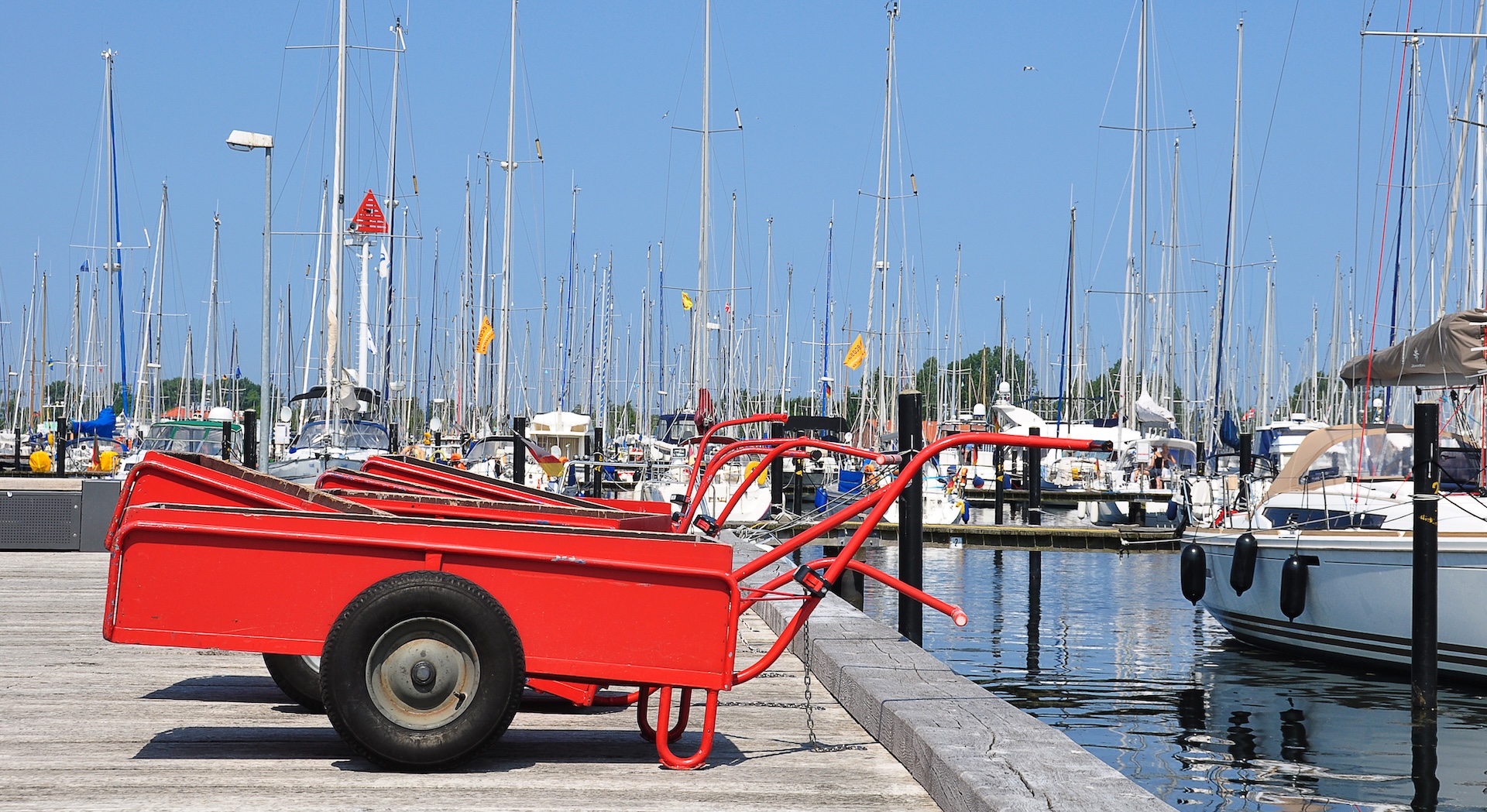
What exactly should you check ashore? For a transit stop: a grocery store, showers, laundry, and somewhere quiet to sleep. For a crew change: taxis, the airport, parking, a nearby hotel, and easy dock-cart and luggage handling. For a longer stay: a pharmacy, a doctor, transportation, reliable internet, delivery options, a place to work, and a walkable environment. For repairs, you need more than a yard. The local area has to be able to support the project. Think about what you will need: mechanics, electricians, welding, HVAC service, consumables, warehousing, courier services, and customs logistics.
Here it helps to think not in terms of "near" or "far," but in terms of friction. A fifteen-minute walk to a supermarket with a cart may be perfectly fine. A forty-minute walk each way in the heat with no sidewalk is not. A ten-minute taxi ride to the airport is convenient. Ninety minutes with a transfer, plus a pontoon without carts, is already a poor marina for a crew change, even if the reviews are glowing.
If you want to compare how different stopovers are presented in practice, it helps to open a few real marina pages side by side - for example Lennusadam, Liepaja Marina, and ACI Marina Palmizana. The point is not that one of them is universally "best," but that the right choice depends on your route, your draft, and the purpose of your stop.
5. Sanitation and environmental management are not decorative extras
If you have a holding tank onboard, a working pump-out system is not a nice bonus. The U.S. EPA explains that holding tanks should be pumped out into an appropriate shore-side or mobile facility, and in no-discharge zones the overboard discharge of sewage is generally prohibited. Blue Flag, on its side, requires toilet tank waste reception facilities in marinas, whether as a fixed pump-out, a mobile unit, or a black-water collection service.
The same goes for waste. You look for options where the entire chain is clear: where to dispose of batteries, oil, contaminated filters, gas cylinders, general trash, plastic, paper, and glass. Blue Flag formalizes this quite strictly: separate marked containers for hazardous waste, separate reception for recyclable waste in several categories, and a marina map showing where these points are located. For a crew, the conclusion is simple: the easier and clearer the disposal system is, the less onboard clutter you deal with and the lower the chance that your stop turns into a dirty basin and a bad overall experience.
6. Stopover context changes the whole equation
The same marina can be excellent for one task and weak for another.
For an overnight stop on passage, the best marina is the one you can enter easily, dock quickly, take fuel or water without drama, sleep properly, and leave cleanly in the morning. The beauty of the waterfront is worth almost nothing here.
For waiting out weather, the winner is a marina with a well-protected basin, a clear entrance in deteriorating conditions, competent docking assistance, low surge at the berth, adequate depth margin, and a shore environment that remains comfortable for two or three days.
Provisioning is simpler. What matters more is the supermarket, dock carts, delivery directly to the pontoon, laundry, garbage disposal, water, ice, and an easy walk into town.
Repairs require something else: the marina must not just "have service." It needs a real technical ecosystem: yard access, contractors, tools, spare-parts delivery, a crane, parking for tradespeople, practical working hours, and a reasonable attitude toward outside contractors.
Lastly, crew changes are mostly about logistics: transfer time to the airport, late arrival handling, parking, gate access, luggage, a nearby hotel, and a calm, legible berth for people coming aboard for the first time.
That is why experienced skippers do not usually have a universal list of the "best marinas." What they do have is a universal process for choosing one.
7. How to check a marina before booking
The recommended order is this: charts, pilotage notes, and Notices to Mariners; then the official marina website and its plan or map; then satellite imagery and photos; and only after that, reviews. Official hydrographic updates are there to help you understand the real navigational picture, while a marina plan helps you see the actual layout of the fuel dock, guest berths, pump-out, sanitation, repair area, and transport links rather than relying on promotional language. Reviews are useful too, especially for spotting repeating problems: surge at the berth, rude staff, fuel queues, weak Wi-Fi, nighttime noise, or poor gate access.
Before booking, it is better to ask a marina a handful of direct questions instead of exchanging pleasantries:
- What is the active VHF channel?
- What is the actual depth at the entrance, in the channel, and at the visitor berth at the current water level?
- What type of mooring is it: alongside, finger pontoon, stern-to, lazy lines, or anchor?
- What are the exact limits for LOA, beam, and draft for the visitor berth itself?
- What shore power is available: voltage, amperage, plug type, and is it included in the tariff?
- Is there pump-out for black water and bilge disposal, and what are the operating hours?
- Fuel, docking assistance, access after office hours - how do these work in practice?
- Can outside contractors be used, and how are yard services organized?
- What is realistically within walking distance: a grocery store, pharmacy, laundry, taxi stand, bus, rail station, or airport connection?
- Are there issues with unpleasant surge or crosswinds in the specific visitor area under the wind direction you expect?
If the answers to questions like these are vague, that is already an answer in itself.
And when you do reach a marina, it helps to leave something useful behind for the next crew. A detailed review is often more valuable than another polished promo page, especially if it explains the entrance, berth setup, utilities, and what daily life ashore actually feels like. On Sailors.Tips, those practical stopover notes are often what make one marina page more useful than a gallery of good photos.
8. Price: look at total cost, not the nightly rate
A cheap marina often turns out to be expensive once you add the extra miles off route, taxi rides to the store, time lost to bridges and locks, paid electricity, expensive water, an awkward fuel dock, contractors charging travel premiums, and two extra days waiting for workable service.
An expensive marina, by contrast, sometimes saves money if it has a good fuel dock, everything is within walking distance, the guest berth is straightforward, the staff are competent, and no time is wasted. In real cruising, the cost of a marina is almost always made up of three parts: the berth price, the logistics price, and the friction price. The last one is usually the most underestimated.
Conclusion
The right marina is not the one with the best photos, the most famous flag, or the prettiest waterfront. The right marina is the one where your boat can enter safely, lie properly, and let the crew solve their shore-side tasks with minimal friction, while the specific context of the stop is supported by the infrastructure rather than undermined by it.
The decision-making formula is simple: first the purpose of the stop, then the safety of the approach, then the berth type and utilities, then shore-side logistics, and only at the end, the price.
If you choose in that order, mistakes become rare, and stopovers become noticeably calmer. If you want to compare options before booking, browse the Sailors.Tips marina map and open a few candidate marinas side by side - that usually reveals far more than photos alone.

Comments
0 comments
No comments yet.
Please log in or register to leave a comment.